
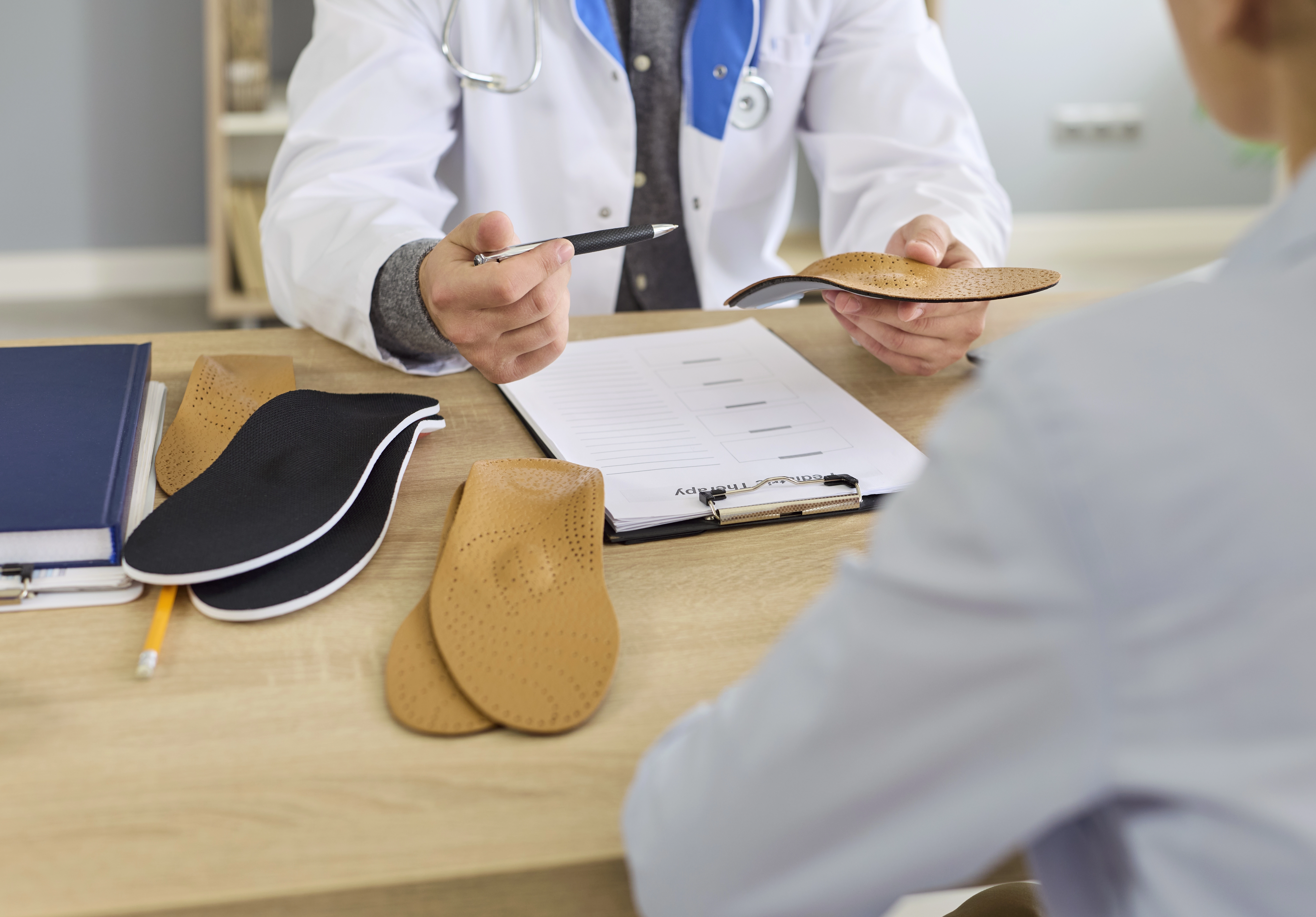
When it comes to foot treatment, custom orthotics are generally the superior choice for individuals with chronic pain, structural abnormalities, or specific medical conditions, while store-bought insoles may suffice for minor, temporary discomfort in otherwise healthy feet. Understanding the differences can help you make the right decision for your foot health.
Your feet are the foundation of your entire body. They support your weight, absorb shock with every step, and provide mobility for daily activities. When this foundation is unstable or misaligned, the effects travel up the kinetic chain, causing not just foot pain, but also discomfort in your ankles, knees, hips, and lower back.
At our practice in Surfside, Dr. Gary Curson sees patients daily who have suffered needlessly from inadequate foot support. With over 40 years of podiatric experience as a second-generation podiatrist, he emphasizes that proper support is about comfort and preventing irreversible damage to your musculoskeletal system.
Poor foot support contributes to numerous conditions beyond foot pain. It accelerates the development of bunions, hammertoes, and arthritis. For patients with diabetes, inadequate support can lead to dangerous pressure points and ulcers.
The terms “orthotics,” “insoles,” and “shoe inserts” are often used interchangeably, but they refer to different products:
Shoe Inserts / Insoles: Generic, over-the-counter products found in drugstores and supermarkets. Typically made of gel, foam, or plastic, designed for extra cushioning or minimal arch support.
Custom Orthotics: Prescription medical devices created specifically for your feet. Designed by a podiatrist after thorough examination and fabricated from precise molds or digital scans to correct specific pathology or biomechanical issues.
Store-bought insoles are mass-produced inserts designed to fit a general shoe size, not a specific foot shape. They come in various forms – gel heel cups, full-length foam cushions, or inserts with slightly raised arches.
These products feature generic arch heights, standard cushioning zones, and one-size-fits-most designs. Materials range from foam and gel to harder plastics, with most lasting only 3-6 months under regular use.
For individuals with no significant foot problems, over-the-counter insoles offer some advantages:
Accessibility: Readily available at pharmacies, sporting goods stores, and big-box retailers
Immediate availability: Purchase and use them the same day
General comfort: Extra cushioning for people who spend long hours on hard surfaces
Shock absorption: Gel or foam helps absorb impact from walking or running
Some newer store-bought options incorporate basic customization features, such as heat-moldable materials or interchangeable arch inserts. While these don’t match true custom orthotics, they represent improvements over traditional flat insoles.
Dr. Gary Curson frequently treats patients who’ve worsened their conditions by relying on inappropriate over-the-counter products. A high-arched foot forced into low-arch support experiences increased stress on the plantar fascia. Conversely, flat feet receive insufficient support from standard insoles, accelerating joint deterioration.
Custom orthotics are prescription medical devices created specifically for your unique feet. At Miami Area Feet, the process begins with a comprehensive biomechanical evaluation. Dr. Curson examines your foot structure, analyzes your gait, assesses posture, and identifies specific areas requiring correction.
Following evaluation, a precise three-dimensional impression is taken. This is a detailed mold or digital scan capturing the exact contours of your feet in a corrected position. Laboratory technicians then craft your orthotics using medical-grade materials selected for your specific needs.
Our practice offers several types of custom orthotics, each designed for specific conditions:
Functional Orthotics: Made from semi-rigid or rigid materials like graphite or plastic. Designed to control abnormal motion and treat conditions related to poor biomechanics – heel pain, tendonitis, and shin splints. They guide your foot into efficient, less painful positions.
Accommodative Orthotics: Made from softer, forgiving materials. Provide cushioning and redistribute pressure from painful areas. Often prescribed for diabetic foot ulcers, painful calluses, or severe arthritis, where protection and pain relief are primary goals.
Sport-Specific Orthotics: Address the unique demands of athletic activities. Runners require different support than tennis players or golfers. Dr. Gary Curson’s sports medicine expertise ensures athletes receive performance-enhancing, injury-preventing orthotics.
The advantages of custom orthotics stem from their personalized, medical-grade nature:
Precise support: Made from foot molds, providing support exactly where needed
Address root causes: Correct underlying biomechanical issues, not just symptoms
Superior durability: Medical-grade materials last 3-5 years or longer with proper care
Effective treatment: Proven results for a wide range of foot and ankle conditions
Prevent progression: Early intervention halts the development of bunions, hammertoes, and arthritis
Long-term value: While the initial investment is higher, longevity makes them economical
Dr. Gary Curson utilizes custom orthotics to treat numerous conditions causing pain and instability:
Heel Pain (Plantar Fasciitis): Support the arch and cushion the heel, reducing stress on the plantar fascia ligament
Flat Feet (Fallen Arches): Provide essential arch support, correct alignment, and prevent overpronation
Bunions and Hammertoes: Slow progression and alleviate pain by redistributing pressure
Morton’s Neuroma: Metatarsal pads spread the forefoot bones, reducing nerve pressure
Achilles Tendonitis: Control overpronation and provide heel lifts to reduce tendon strain
Arthritic Foot: Accommodative orthotics cushion painful joints, improving mobility
Diabetic foot care and soundwave therapy are available at our practice to accelerate healing and prevent re-injury.
Custom Orthotics: Created from 3D molds capturing every dimension – length, width, arch height, and heel depth. Account for differences between left and right feet. 100% unique to your anatomy and medical needs.
Store-Bought Insoles: Mass-produced in standard sizes (small, medium, and large). Cannot account for individual variations, deformities, or asymmetries between feet.
Custom Orthotics: Actively correct biomechanical abnormalities with targeted features like medial posting for pronation or specific arch support for high arches. Clinical studies show superior outcomes in the treatment of medical conditions.
Store-Bought Insoles: Provide only general cushioning. Incapable of correcting alignment issues, therefore ineffective for most medical foot conditions. May temporarily mask symptoms without addressing causes.
Custom Orthotics: Prescribed by experienced podiatrists after a thorough medical examination. Dr. Gary Curson’s 40+ years of experience ensure proper diagnosis and treatment. An ongoing relationship allows adjustments as needs change.
Store-Bought Insoles: Chosen in retail aisles with minimal guidance. Sales associates lack medical training. Dr. Gary Curson regularly treats patients who’ve suffered from misguided insole choices. Runners adding extra cushioning without addressing pronation often develop IT band syndrome.
The choice between custom orthotics and store-bought insoles comes down to your individual needs. For minor discomfort in healthy feet, store-bought insoles may provide adequate relief. However, for anyone with chronic pain, structural abnormalities, or specific medical conditions, custom orthotics offer superior support, correction, and long-term value.
A decision should be made with guidance from a podiatrist, such as Dr. Gary Curson, who can help you achieve lasting comfort and mobility.

About the Author
Dr. Gary Curson

May 30, 2026